Visio Divina · Monday, October 19, 2026
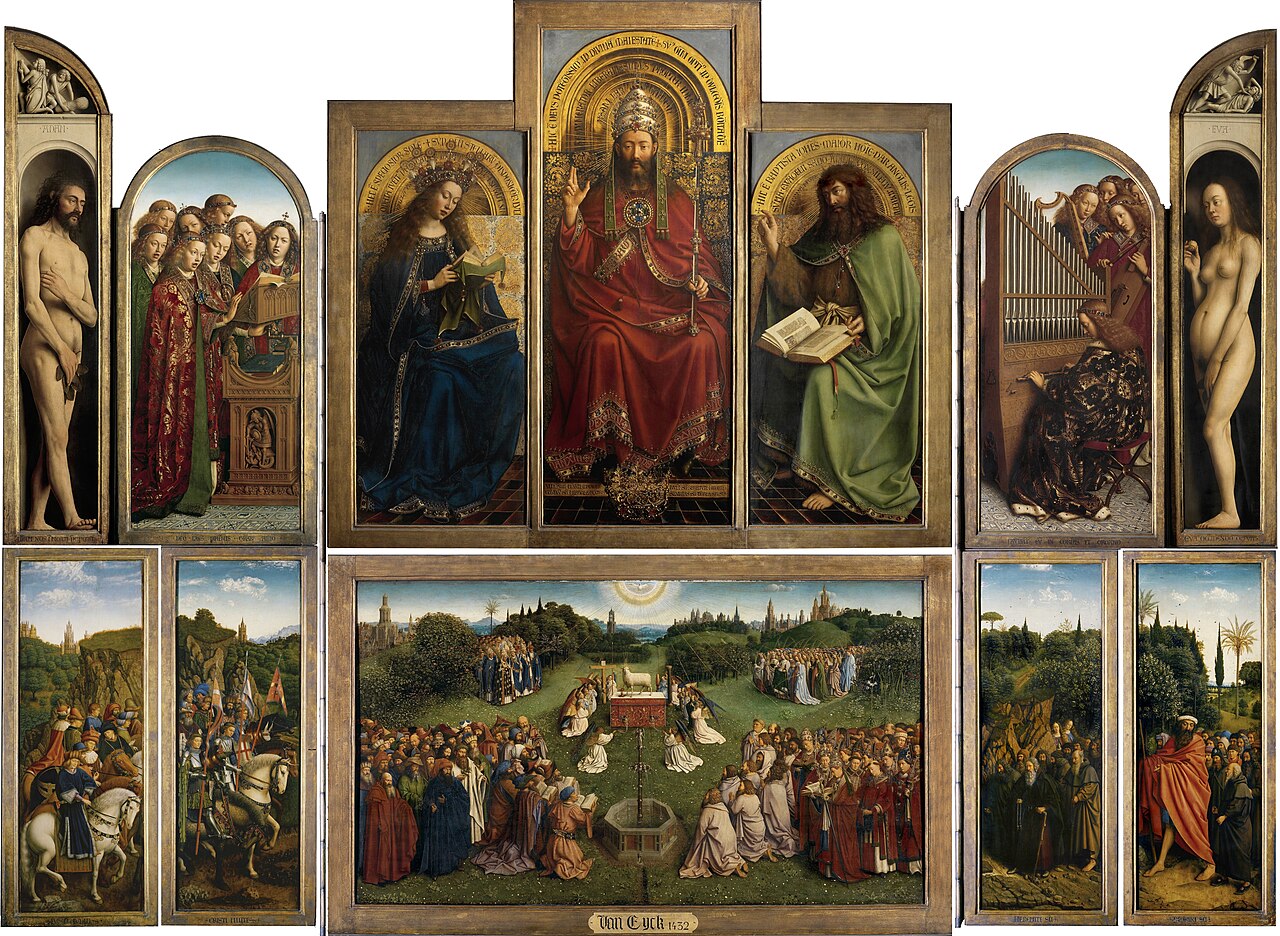
The Adoration of the Mystic Lamb (Ghent Altarpiece)
Jan and Hubert van Eyck · Completed 1432
Why It Matters
The polyptych is widely regarded as the inaugural masterpiece of oil painting in the Western tradition. Its central panel — the Lamb upon an altar surrounded by saints, prophets, and pilgrims — is a visual catechism of the Communion of Saints, drawn from the imagery of Revelation 7.
Context & History
Stolen, hidden, ransomed, and repatriated more times than any artwork in history (most famously by the Nazis and recovered by the Monuments Men), the altarpiece survives as a kind of icon of Western civilization itself. A 2020 restoration revealed the Lamb's startlingly humanlike face — long obscured by overpainting — sparking renewed theological debate about its symbolism.